
Enterprise marketing teams have more of everything: more people, more budget, more tools, more expertise. So you'd expect them to be the fastest at getting an email out the door. In our Marketing Production in the Age of AI report, they're the slowest.
Our respondents are the people who run these processes: 333 marketing ops, demand gen, growth, and marketing leaders at companies from $50 million to well past $1 billion in revenue, every one of them on an enterprise MAP. At organizations over $1 billion, 14% need more than 10 business days to produce a single email from brief to send. Across the full sample, it's 2%. That makes the biggest companies roughly seven times as likely to land in the slowest bracket, and every other revenue tier sits under 2%. The long tail belongs almost entirely to the top.
Ten business days is two full work weeks for one email. In that time, the campaign it was built for can move, the offer can change, and the send date can slip past the moment it was meant for.
The easy explanation is bureaucracy, and there's some truth in it. Big companies have more layers, and layers take time. The rest of our data is more useful than that label. It points at the specific layers, and at why they don't get simpler as the tools improve.
Why email production slows down as companies grow
Jacqueline Freedman, a marketing operations advisor who joined our panel on our webinar, described the pattern better than any chart: "It's one thing when you're a team of two. Very easy. Everyone can sit in a room, hash it out, figure these things. But when you start growing and maturing as a company, not everything else matures alongside it."
That last sentence is the whole problem. A two-person team decides in a hallway. A global marketing organization routes the same email through brand, legal, regional compliance, localization, and at least one director whose calendar is already full. Each of those checkpoints was added for a good reason, usually after something went wrong. Legal protects the company, brand protects the brand, and regional teams know their markets better than headquarters does.
Nobody at a $1 billion organization decided to be slow. The approval chain grew one reasonable layer at a time, and nobody went back to redesign the whole of it. The technical architecture behind enterprise orchestration matters for exactly this reason: a process with more handoffs needs a system built to carry them, or every handoff becomes a wait. That's the job of a campaign production platform built for enterprise scale: holding the roles, templates, and approval paths in one place so the chain stays visible.
Why $1B+ companies are slower to adopt AI in production
The same pattern shows up in how enterprise teams adopt AI. Marketing decision-makers at $1B+ companies are 50% more likely than the overall sample to say their team is still in the early stages of AI adoption in production: 46% of them, against 31% overall.
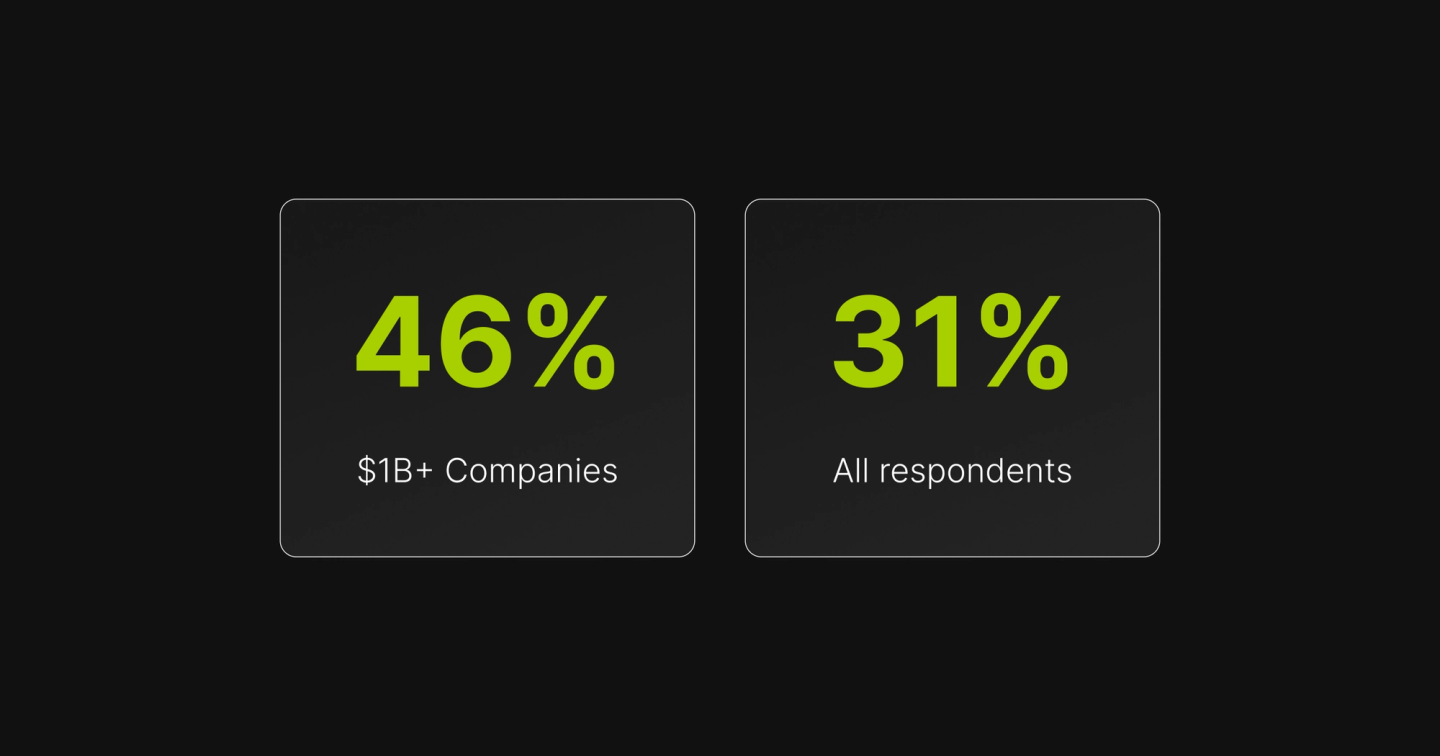
The biggest companies are 50% more likely to still be in the early stages of AI adoption in marketing production. (Source: State of Marketing Production, 2026, Knak)
That can look backwards at first. These are the organizations with the biggest budgets and the most to gain from AI in a slow production process. But every new AI tool has to clear the same approval chain every email does. Security review, legal review of the data terms, procurement, a pilot, a steering committee: each step is defensible, and together they turn "let's try this" into a quarter-long project.
I'd call that a governance problem more than a talent problem. The marketers at these companies aren't behind. The systems built to protect a large organization change slowly by design, and that leaves the people inside them waiting on tools their peers at smaller companies are already using.
AI fluency is becoming a leadership skill at enterprise scale
The skills data adds a twist. Across our full survey, 53% of marketing decision-makers named driving AI and automation adoption as the most critical skill for career growth over the next few years. At $1B+ companies, that rises to 64%. Among advanced AI adopters, the teams with AI embedded across their whole production workflow, it's 72%.
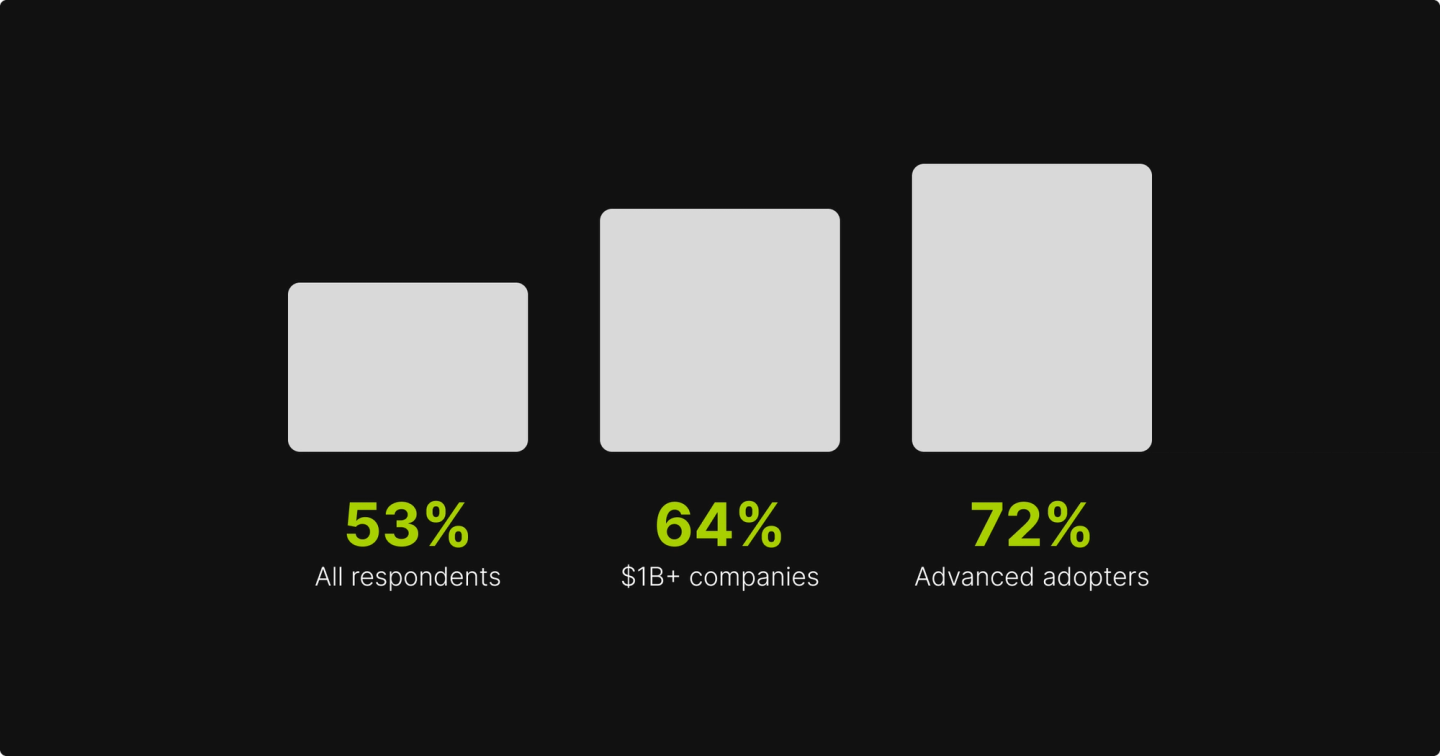
The bigger and more AI-mature the company, the more marketers see AI fluency as the skill their careers depend on. (Source: State of Marketing Production, 2026, Knak)
So the people at the largest companies are the ones most convinced that AI fluency will define their careers, while working at the companies slowest to give them the room to build it. Our HITL maturity curve maps how that fluency grows in stages, from individual exploration to team-level tools to agentic systems with human review built in. You're not falling behind by sitting on an earlier stage. The trouble starts when the organization asks for the later stages without funding the path.
That's what the training data says is happening. MarketingOps.com's 2025 State of the Marketing Ops Professional research found that 59% of teams lack AI and automation expertise. In GPTZero's roundup of marketing AI research, 75% of marketers say their organization offers no AI education or training for the marketing team. Among marketers not yet using AI, 71.7% name lack of understanding as the main barrier.
Picture the senior marketer this lands on: told that AI adoption now defines career growth, given no formal training, and still accountable for this quarter's send calendar. The only place left to learn is on a live campaign, under deadline, with brand and legal watching. That's a slow way to build a skill, and it shows up in the production timeline.
How enterprise teams cut email production time
The enterprise teams that have closed this gap kept their governance and redesigned where it happens.
Uber is a good example from our report. Its asset deployment time dropped from 10 days to 4.5, nearly in half, by eliminating manual workflows. Google Cloud went after the same problem from a different angle, reducing campaign change requests by 90% and adding up to $2 million in savings. Both stories start with fewer places for an email to wait, well before any bigger team or bigger AI budget.
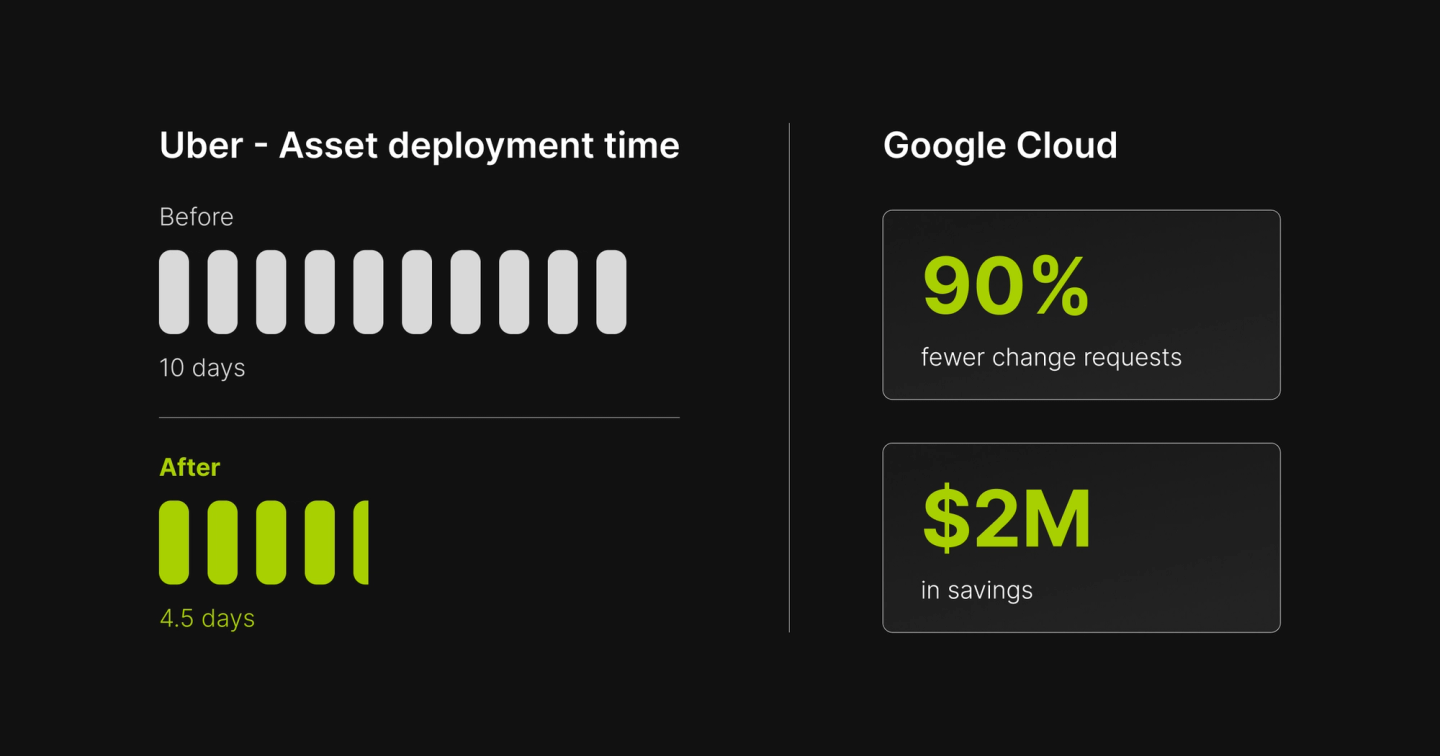
Enterprise teams that redesigned where their production waits got days and dollars back. (Source: State of Marketing Production, 2026, Knak)
Three moves follow from those stories, and all three are leadership decisions.
The first is naming one owner per approval step. A named person with authority to decide moves faster than a committee that reviews, and most emails don't need every stakeholder on every send. Put those owners and approval paths in the production system itself, and the chain stays visible instead of living in inboxes.
The second is moving repeatable decisions out of the per-send review. When brand styling, legal disclaimers, and regional requirements live in approved templates and modules, reviewers can spend their time on what's new in an email instead of re-approving what they signed off last week.
The third is funding the AI training your people already know they need. 64% of marketers at $1B+ companies already see AI fluency as the skill that will shape their careers. An organization that builds a real path to it, with time, access, and cleared tools, gives those marketers somewhere to learn besides a live send, and gets faster in the process.
The seven-times gap is an organizational outcome, and organizational outcomes can be redesigned. Enterprise teams already have the people and the budget. What most of them need next is a production process that grew up alongside the company. The full revenue-tier data is in our Marketing Production in the Age of AI report.